

Leveling Up
It's OK to grieve the small injustices too.

In the three months since Trump became president again, my colleagues and I at the Injustice Report have been focusing on the big stories of injustice in this time. But last night, as I gathered over drinks with friends from the Austin literary community—writers and journalists and the one agent we all adore—I was reminded of a truth I learned a long time ago: The small injustices matter too.
In fact, I believe naming and grieving the intimate, frustrating, seemingly insignificant injustices that affect our families, communities, friends, and ourselves allow us to gain the empathy we need to face the massive injustices around us.
If you’re reading this newsletter, I’ll start with a few assumptions: You’re educated, and well off enough to have leisure time to thumb through a newsletter over coffee or lunch or a work break. You care about the world around you so much you subscribe to something with “injustice” in the title. You’re probably worried financially right now, but you also might feel guilty about that—your financial worries might be more along the lines of, “we have to wait on that trip” or “does my kid really need three camps this summer?” rather than “how are we going to get our next meal?” You’re either panic-buying ahead of the tariffs, or panic-saving ahead of the financial collapse—depending on the day and the news source. You probably punishingly pay attention to the news cycle or social media feeds both because you genuinely care about the state of the world, but also out of a sense of shame—nothing you face will ever be as bad as what is happening in that other place. And you constantly have a voice in your head telling you that your worries are a sign of your privilege, that you should stop focusing on yourself and focus on what’s happening to others instead.
You would think, given the fact that I’ve done dozens of interviews with some of the most vulnerable people in the world over almost two decades, that I would tell you your private griefs and injustices don’t matter. It’s the opposite.
Not in spite of those interviews, but because of them I’m here to tell you: it’s OK to feel your own griefs too. Small things. Intimate worries. Injustice on a personal scale. That’s all any human ever faces, really.
Over the years, I’ve learned from the people who are resilient, whose grit endures, who are healthy and loving and whole despite everything they’ve endured, how to move forward in a time like this.
First, we name and grieve and accept the big and small injustices. Then, we assess where things really are, Finally, we level up.
Indulge me in telling you a few stories.
All I wanted for my career was what men in the 1960s had, the ones with elbow patches on their tweed jackets and cigars still smoking on their desks and a wife at home mixing them a drink at the end of a long day. When I started my PhD program in literature at the University of Texas, it was a smart financial choice—I got a stipend, and had no loans. I wasn’t making a ton of money, but I wasn’t losing money either. I started my PhD at a time when 94% of the people in my program graduated with a job offer in hand; it was an excellent return on investment for an upper-level degree. And my graduate adviser that first year told me about his own career: graduating with a PhD from the University of Chicago, publishing a couple of articles, and then teaching for several decades. He called it “the life of the mind,” and I immediately envisioned my own future reading and discussing literature with engaged, lively students in a dimly lit office lined with books and plants and framed art.
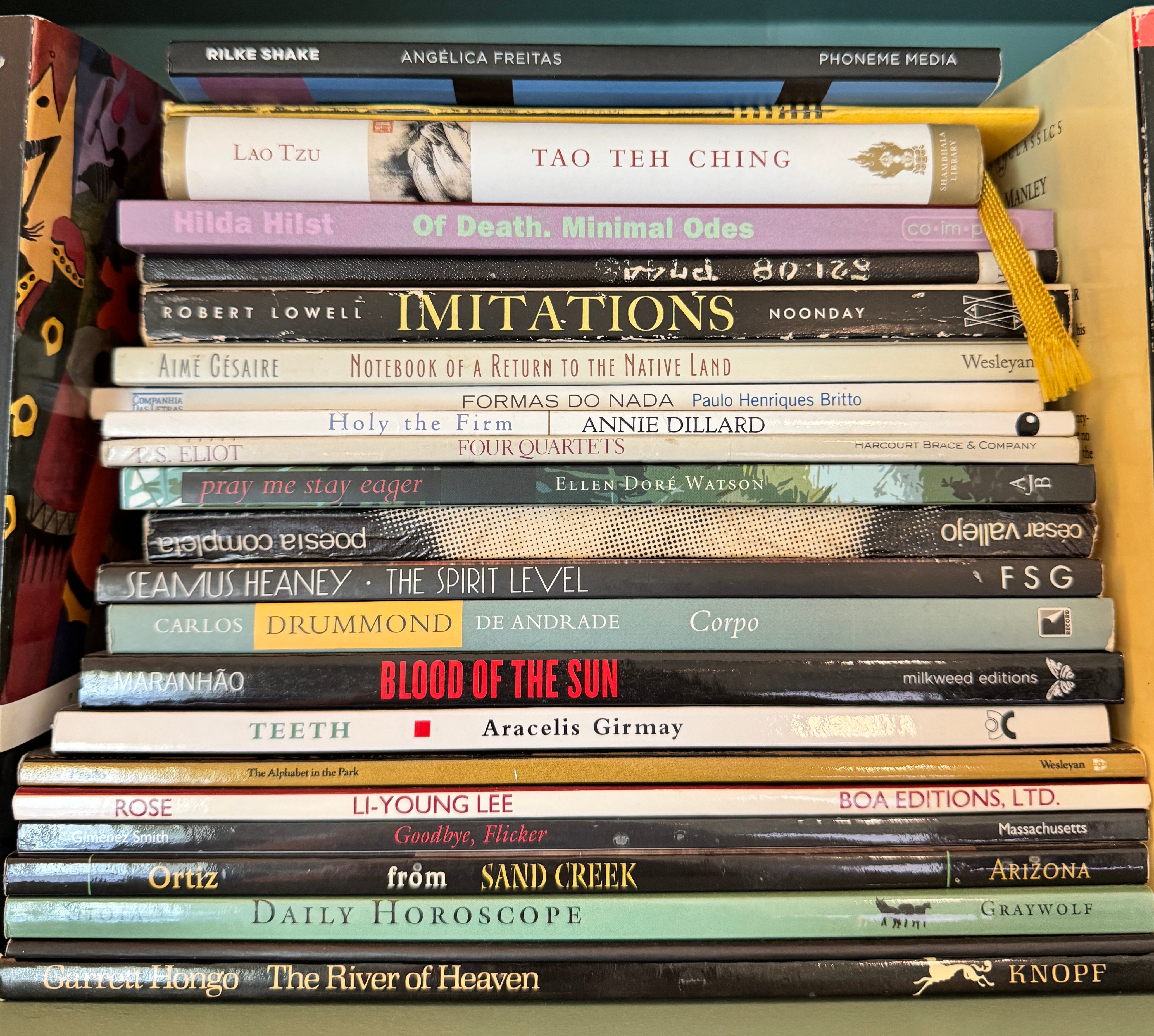
I loved that vision. I love it still. Some days, I grieve it so much it hurts.
And then, just after I started, we hit the Great Recession, and the academic market tanked. By the time I graduated many, many years later, I also had children, including one with medical complications. How in the world was I going to cart my family to three or four postdocs in Indiana or Nebraska or Mississippi for a year at a time, making maybe $40,000, with no promise of employment to come? The math was impossible.
That was also when the rhetoric was starting up in Texas calling refugees ‘terrorists,’ and other ridiculous things. I’d been friends with former refugees for almost a decade by then, and when some of them asked me to tell their stories, I wouldn’t dream of refusing them. I turned my love of reading and writing into a career that is really important to me, that brings me meaning and purpose and joy.
I have no regrets about the choices I made.
But some days, my throat catches that that other life is not available to me anymore. The quiet one, where I spend all my time focused on scholarly arguments about poets’ choices and encourage bright young minds to pursue a life in the humanities. Where I drink too much tea and my hands hurt from grading in the fading afternoon light from a tree-soaked window. Where everyone calls me “Dr. Goudeau” until I correct them by saying “it’s Jessica.” Where I’m more teacher and scholar than writer.
That’s a life I spent years pursuing. It’s the life of the mind so many white men got before I was born, and that is rarer and rarer every year to first generation students or people of color or women. Maybe I would have made this choice anyway, but the economics shifted before I got a chance to really choose, and that sucks.
I’ve had so many good things happen, yes. And, I still think it’s OK to grieve what might have been and never will be.
I sat around a table of journalists and writers and editors and an agent last night, talking about how it used to be.
How in the 1990s, you could write three or four long features a year and make mid-six figures (they told me—the imposter journalist—this information and I was gobsmacked; the math does not make sense to me). How you could lunch on the company dime at Michelin-star restaurants. How you could work freelance for $5 a word after a few years of experience. How you could get health care and a sustainable job and not feel like a unicorn.
I was sitting at table with some of the most successful writers I know, talking about the complicated economics and sacrifices and losses, sharing the grief of what once was. We did the thing we often do: “Well, you know, it could be worse.”
Of course it can. And the frustrations are valid. Both/and.
Feeling sad about what happened to us doesn’t negate our capacity to connect with someone else’s bigger, deeper sadness. All griefs are, ultimately, personal.
When I was writing After the Last Border, I’d been interviewing Mu Naw for several weeks when she first told me about a box of letters. She and her husband were high school sweethearts and, when they first started liking each other, she tucked their love notes into a box. Right before they moved to the States, she buried that box in a secret place in the jungle. It seemed impossible that their new life would be real; she could not envision the United States, but she knew where her favorite tree was and would be. So she put the letters there.
Ask her about the war, and she can tell you some things, but her great regret is leaving behind a small box of folded notes to her young love.
Hasna’s daughter was widowed in Syria while the rest of the family were safe in Jordan; after losing her beloved husband, she escaped with her two little boys across the desert. I have no idea how she survived. She doesn’t either.
One day, after making it to Turkey and then Italy and then Greece, she was in Athens when she was mugged. The thief took her cell phone, which had the only pictures she possessed of her husband and babies.
The desert crossing was awful; the greater grief was losing those pictures. She still talks about it sometimes.
One of the asylum-seekers I interviewed from Guatemala wanted to be a teacher more than anything. She got involved with an abusive man in a gang. He raped and persecuted her. She ended up having to flee, helped by a friend to get out of her house. She found a smuggler who helped her get across the border. She’d been in the US for three years when we met.
She kept coming back to the same point: she was learning English because she’d always wanted to be a teacher. Everything she had been through did not dim her dream—there was a vision of a future self that had almost been taken away, but she was determined to make it reality.
I’ve lost touch with her. I hope she’s in a classroom of her own, hands dusty with chalk, feet tired, deeply satisfied.
When the stories of the child separation policy first started coming out during the first Trump administration—when they separated parents from children as a matter of policy to deter more people coming—I interviewed a mother of four daughters. Her youngest two stayed with her, her oldest two were taken, and her husband was sent someplace else.
Eventually, she found her husband. For weeks afterwards, she worried about her older daughters. The ICE facilities were so cold, and she’d held on to her oldest daughter’s hoodie by accident.
What would happen to her daughter, without that hoodie, in the bitter cold? She rubbed the hem while we talked. It would be several more months before she found her daughters again, taciturn and withdrawn after all they’d been through, but safe.
I wonder what she did with that hoodie.
The balance might be hard to find, but too often, we repress our feelings out of a sense of guilt that our worries are small. Your friends or therapist are safe people to tell; journal it if you need to. But give yourself room to name those injustices too.
It’s frustrating that the economy is tanking.
It’s difficult that the careers we dreamed of are drying up.
It’s exhausting, working three times as hard for the things our parents and grandparents achieved, like stable jobs and good homes and easy educations and straightforward lives.
It’s worrisome that our kids are graduating into a tumultuous chaotic time.
It’s concerning that the planet is on fire while democracy is on fire. One fire should be enough.
It’s complicated, trying to protect your mental health and also pay attention to the world.
It’s burdensome to carry these griefs with us, big and small.
At some point, after you’ve acknowledged them, you’ll have to do a real assessment of where we are. This is where I will turn to my friends who have lived through authoritarian regimes and war to say where we are not.
Three months into a wild Trump administration, many things feel as if they are falling apart. Are we squirrels on a tree that has been chopped until it is about to fall, unaware that the branches that feel secure are moments away from crashing? Or has the tree taken some hits but will continue to stand? How do we know?
We can’t, yet.
But after years of listening to people talk about their experiences fleeing Syria or Afghanistan or Cuba or Congo or Haiti or Myanmar or Sudan, I have some ideas: the US has had, so far, a very scary brush with authoritarianism. Systems that once held have cratered faster than we thought. But some things have held better than we expected.
Things are bad, but they could be much, much worse—and in many places around the world, they are. We can use our current fears to connect with those larger injustices too.
And there are lots and lots and lots of good people who still care about each other right now.
We can look to history to have some sense of what is coming, but every story is different enough, and this one is yet to be written. What will come is not just unknown, it’s up to us to determine.
And that’s where the final step comes in.
My husband has started saying to our kids sometimes, “It’s time to level up!” (They, as teens, love this saying, don’t worry.) By that, he means that moving to the next level of high school or college or a career or a sport or a musical ability comes with drive and the need to work harder. It is difficult; you’ll feel busier and more frustrated and more challenged.
It’s also a moment you can meet. You’ll have to work harder, and dig deeper, but you can do this hard thing.
I told my dear friends about this saying a few weeks ago and they loved it. “No wonder this new career move has been hard for my family,” my friend who went back to work said recently. “We’re all leveling up!”
I realized that it’s the thing we need to do now.
Leveling up is very different from complaining. That might be helpful or stress-relieving in the short term, but eventually, it saps your energy.
To level up, you acknowledge that things are hard. You feel your feelings, and give space to your griefs. You allow yourself to say, or you say quietly to a friend, “I know it’s small, but it’s just not fair.”
You tuck it away, and keep going.
Sometimes I miss and grieve the life I might have lived (the life that also, in my mind, is pristine and unsullied because it will always remain a fantasy). But I do not regret the life I live now—the choices I’ve made for my family and my community. When my grandmother lived through World War II, while my grandfather went off to war, she started a liberty garden because it was one thing she could do; she told me stories about it later, and I held those stories to me when I quit the career I loved in order to move into a career I was uniquely qualified for because of years of friendship with former refugees.
This is the thing I can do. It was significantly harder in many ways. And I can’t imagine making a different choice.
I don’t know what’s in front of you now, but I know there’s something in front of all of us. I know it’s easier to feel frustrated and to complain, to be annoyed or to ignore. Anything feels easier than doing the hard thing in front of you.
But the time has come to level up.
Over Christmas, with the kids, we often have a movie marathon. We’ve watched Star Wars and the Marvel movies and Anne of Green Gables and BBC’s Pride and Prejudice. This year, we watched the Lord of the Rings series.
I did not realize until we started how much I was craving these stories, which I have read and watched more times than I can count, that are about hobbits on a quest through Middle Earth but also about a world in a time of darkness, when war is always on the horizon, when the old life is gone never to return, and evil is everywhere around you. When you feel small and insignificant. When it would feel easier to hide than to do the hard thing.
I realized I’d been holding myself for these lines when they came, and I teared up as they hit me in a new way, in late December 2024:
“I wish it need not have happened in my time,” said Frodo.
“So do I,” said Gandalf, “and so do all who live to see such times. But that is not for them to decide. All we have to decide is what to do with the time that is given us.”
We acknowledge and grieve our small injustices. It’s not fair. It’s not what we wanted. It’s not the life we once dreamed of.
We soberly face the truth of where things are right now. These are the times we’ve lived to see.
And then: and we fight injustice with everything we have, as long as we can, or until things finally change. The time has come to level up.
This really met me exactly where I’m at tonight. Thank you.